Thursday, 7 April 2016

VIDEO; Gardening Without Cutlass-GROWING Wild Okro


So I came across this inspiring young man growing Okro in the wild employing No-till cultivation method. This is such an amazing step as it reduces the energy input from the farm and conserves the integrity of the biological composition of the soil. No-till cultivation is gaining prominence in a lot of organic and bio-intensive circles. This young man even though motivated by profit is making a big move.
Salut to Mr Jerry Osazee!

Wednesday, 6 April 2016

Fuel, Food And Optimism


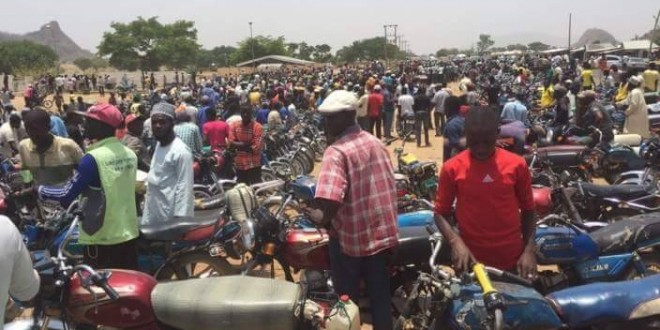
The fuel scarcity is hitting everyone hard. The small to medium scale businesses are really struggling as well and like the rest of the country we are begging for respite. Fuel scarcity also poses a major threat to our food security. The cost of transporting food round the country would increase which would also spike the food costs. Not good news at all at the moment. Losses are been incurred everywhere in the country.

I came across a news article regarding these losses from the Abuja Chamber of Commerce and Industry (ACCI) which made it clear to the government that the issue of unavailability of petroleum products and its importation portrays our country in bad light. It shows us up as an incompetent manager of our resources.
“NNPC from the comments of it’s officials may have given up. We may seriously need to divest our refineries. Businesses and our economy are being battered from all sides. Forex, energy supply, infrastructure, security concerns. The list is endless.” He said
Businesses especially MSME’s have lost over N30B through inadequate supply of petroleum products. Labour productivity is low as employees have stayed off work since the hike of fares by providers and when they come, they are always late. NNPC banned the use of containers to buy petrol without considering that most households and small businesses run on petrol generating sets. This has forced them to close shops. Buying with kegs is not the cause of scarcity but inadequate supply of products.
According to Tony Ejinkeonye, NNPC over the years has not proffered any meaningful solution. They are fond of treating symptoms instead of addressing the issue, he concluded.

The fate of a business owner in Nigeria at the moment reminds me of a Late Koffi Awnoor verse;
"If I turn here, the rain beats me
If I turn there the sun burns me
The firewood of this world Is for only those who can take heart
That is why not all can gather it"


Naija, we are still pregnant with hope!

Meet The Next Generation of Farmers In Abuja

More young people are interested in Agriculture than ever before due to a combination of factors. These young individuals are passionate and knowledgeable about current Agricultural practises. They are able to fuse their knowledge of the global economics with the immediate need of Nigerian farming and economy.
The images below are from Fish Farming cluster in ABUJA. Run by young individuals with a exciting new ideas for Farming.
I salute your efforts!

Monday, 4 April 2016

Meet The Modern Farmer From Uganda


Lanyero Family Plot
Gulu Region, Northern Uganda


Christine Lanyero was only a teenager in 1987 when Joseph Kony’s brutal Lord’s Resistance Army occupied the Gulu-region village where her family farmed. After the LRA killed Lanyero’s father, she walked nearly 250 miles to a refugee camp outside the city of Kampala.

But in August of 2014, the camp’s land was sold for development. With financial aid from a U.S.-based nonprofit, Lanyero—along with 31 other women and their families—journeyed north to their ancestral lands, which are once again considered safe.


Lanyero, her husband, and her five children moved into a new mud-brick and thatch hut steps away from where she grew up, and she planted maize, groundnuts, cassava, and soybeans. Like the majority of women in Northern Uganda, Lanyero digs food (dig is the local word for farm) to feed her household, and often walks long distances to sell surplus at regional markets. Every day, she carries jerricans over a mile each way to the nearest borehole to gather water. “It is difficult to start over and make a life again,” she says. “This has not been easy. The digging is challenging, and the market is far away. Everything is far away.”

Christine is just an example of a growing trend of modern farmers who seem to be characterized by the sheer will to grow food against the odds of environment, social hindrances and lack of access to land either due to cost or land grab challenges. Christine's story shows us that there is a way and more importantly she isn't alone; there are many people in her situation and many individuals and organizations that have dedicated their time and effort to help work together and solve these problems.

Do you know any modern farmers around you that would benefit from support and a network to help improve their farming methods and improve quality of life, please contact me and lets see what we can all achieve together. Lets keep growing.
KOA

The nonprofit After the Bulldozers—founded by a 16-year-old girl in Danville, California—helped Lanyero and more than 200 others.

Tuesday, 29 March 2016

WATER RUNS DRY...

Good morning, this is to hoping everyone had a refreshing and enjoyable Easter holidays. Its been a week since we posted up the press release for the Biogas Project we embarked on in Rije community of Kuje. I felt it was only right to keep those of you that showed interest in the news article a follow up into the process and our progress thus far.

Our technical partners from Cotonou have arrived. The Franco –Anglo barrier continually been stretched into a blur as we communicate. The biggest set-back thus far has been the challenges with the water. We decided to dig a ground –water borehole which hasn’t looked like a splashing success. On first trials the water supply has been stuttered at best. We would continue to find a solution to the borehole situation meanwhile the engineers have started digging the ground and making preparations for a bio-digester tank.

The next challenge for us now is building the actual bio-digester tank. We are in process of searching for a reliable metal work construction contractor to help us build the tank. We prefer this over the plastic types used in a lot of the foreign manufactured tanks. They are a lot more durable, robust and resilient than their foreign counter parts therefore we don’t mind spending a bit more. Never under-estimate the possibilities of a rodent infestation and how quickly they can chew through plastic. I have included some random images of all the works so far. Enjoy and please leave a comment or email us with any questions or ideas you want to contribute to making Rije Community build its own electricity grid.
-KOA

Monday, 21 March 2016

Kuje Community Solves Energy Problems With Innovative Waste Management


The off-grid community of Rije in Kuje Area Council Abuja, have an extra reason to be hopeful towards the future as a social enterprise initiates a waste to energy project in their community.

Ajima Farms and General Enterprises Nigeria Limited has embarked on the mission of solving the energy challenges facing off-grid rural communities. This mission is currently been achieved by the launch of their Waste-2-Watts Off-Grid solution in partnership with The United States African Development Foundation (USADF) under the Power Africa Challenge. The project would provide electricity, water and bio-gas cooking stoves all powered by the agricultural wastes generated around Kuje which happens to be the hub of farming activities in Abuja.


The project manager, Miss Fatima Oyiza Ademoh and her team of young experts in an interview with the newsmen stated that providing cheap and clean electricity to the community will improve so many aspects of their lives but more importantly it will boost their agricultural productivity because farming is their major source of income. The electricity will be used to process and preserve some of their agricultural produce, boast their productivity and spur several business ventures.’’ She noted.

Ajima Farms would provide bio-gas cooking stoves to help tackle issues of using fossil fuels and firewood which the villagers currently source by cutting down economic trees like shea butter to cook. The project would actively engage the youths in the community during the construction of the bio-gas plant and also trained to manage and operate the biogas technology.

The chief of Rije community, Mr Ibrahim Atakunyamwa thanked the company for choosing Rije to start-off this project while promising to secure and maintain the facilities adding that the project was a step in the right direction for his community.He said the project was a divine intervention after waiting so long for the government to provide such amenities but yielded no result.
``This organization came to us last year and promised to embark on this project but we didn’t believe it will come to reality because many have come with similar promises without yielding any result.
``We will make sure we secure all the facilities to be used for the project and will sensitize our women on the dangers of deforestation and climate change.’’ The chief said.

Ajima farms plans to expand this project to other off grid communities across Abuja and the country. Energy poverty is a massive challenge faced by the country, Kuje alone has 47 off grid communities while the amount of wastes dumped into landfills across the country continues to rise. This project would help address this challenges with their innovative approach to waste management

Tuesday, 8 December 2015

Waste, Energy and Green Days


The colour of Monday is green. The prospect of a new working week and getting productive has always coloured my Monday so.It has always been green for me. Today I ha extra reason for feeling very green. I spent the best part of yesterday researching into agricultural waste the impact of landfilling and the potential it holds for alleviating the energy poverty in this county.

Energy poverty is a real. I was not one to consider it in detail until I started researching into agricultural waste and how it can be handled. Experts in energy matters that Nigeria has one of the highest cases of energy poverty in the world while there lies a massive potential to convert waste to energy and help alleviate our energy challenges in this country. Agriculture is an activity that always produces a large amount of waste particularly in animal husbandry. A poultry farm with a thousand birds would produce half a tonne of waste in a day. We have traditionally only used this waste as a source of fertilizer on the farms but with recent advances in converting biomass to energy, agricultural waste would suddenly be viewed in a whole new spectra.

Biofuels seem as viable options to reducing our reliance on fossil fuels and providing electricity and cooking fuels to communities that are facing chronic energy poverty. The impact of electricity in developing a community is well documented. Having an alternative to the traditional sources of energy is crucial. Agriculture when done right can become an invaluable tool of development. My yesterday was green and I hope for a future is green in so many ways.

KOA

Thursday, 29 October 2015

Young Africa Works Summit -Mastercard Foundation

We are at the Young Africa Works summit at Cape Town where amongst various issues financial inclusion for the youth are been discussed. Follow the discussion on twitter using #YAW2015