Friday, 22 April 2016

AfDB Invest $300 Million In Agriculture


The African Development Bank (AfDB) in its continued efforts at providing fund for youths involved in agriculture would be investing about $300 million as part of innovative funding mechanism for youths in agric-led employment initiative. The funding as revealed by the Minister of State for Agriculture, Heineken Lokpobori would help develop the country and encourage youth in aghriculture.

This is news we can only hope the usual challenges of engaging the youth is overcome with this extra push coming into this critical sector of the economy. I would advice serious agro entrepreneurs to keep an eye out for some grant opportunities and loans from AfDB soon as they seek to achieve the mandate laid down with this kind of investment. Anyone with innovative social enterprise projects they wish to develop and possibly gain funding for, they should click here to get help incubating and accelerating such projects.

Have a productive day.

KOA

Thursday, 21 April 2016

Renewable Energy Conferences and Farm Sales


Good morning people, it has been a little while. I hope everything has been going on well with your daily endeavors. A lot has been happening. There is a conference on Solar & Off-Grid Renewables West Africa 2016 been held in Accra Ghana. We are patitently waiting to hear all about the latest development from our delegate at the event. You can follow the conversation on twitter using the #SORWA16 and #AfricaPV hashtags. You can read more about the conference here

Meanwhile I came across this video of a Fish farm for sale along Ibadan express way. I am going to contact the uploader of the video to get more information. I cant help but think of the employment this site can generate, you guys could all tell me what you think.

Monday, 18 April 2016

N12bn Worth of ‘Strange Projects’ Discovered in Agriculture Ministry’s Budget


Minister of Agriculture, Audu Ogbeh and his team have reportedly found 386 strange additions worth N12.6 billion in the ministry’s budget proposals – which were believed to have been inserted by the National Assembly.

The said projects were allegedly fixed into the budget after the N40.918 billion earlier proposed had been reduced to N31.618 billion.

A source told the Nation Newspapers that Ogbeh and his team were shocked at the strange inclusion found in the budget after they discovered about 3 projects that aren’t linked with agriculture in the budget.


Some of the projects are erosion control in Federal University, Kashere, Kwadon and Garin Alhaji at N200 million, N100 million and N45 million.

A source reportedly told the news outfit that: “In the Agric sector, 386 projects were inserted, which totalled about N12.6 billion.”

“While N5.3 billion of the main ministry’s budget is taken away, about N7.2 billion is infused into almost 40 agencies and parastatals of the agric ministry.”

Also, 58 boreholes for 29 rural communities worth N175 million as well as another 50 boreholes for 50 communities worth N150.4 million were also added to the budget.

According to the source “curiously, the communities are not named.”

“Similarly, of the N90 million allocated to the Cocoa Research Institute in Ibadan, various sums are allotted the following ýof the seven sub-heads: provision of rubber seeds and seedling in Igbotako, Okitipupa, (N5m), training and empowerment of youths in poultry farming in Oluyole, Ibadan(N20m) and provision of cassava processing plant in Etsako East Local Government Area of Edo State(N10m).”

“Of the four sub-heads under the Rubber Research Institute, Benin, two areas are equally outside the focus of rubber. These are training and empowerment of youth and women in fish farming in Ndokwa, Delta State as well as fabrication and installation of cassava processing machines in Owan West Local Government Area of Edo State at N10m and N20m.”


“Also, N1 billion was allocated to two projects in Kwara South Senatorial District, including the construction of rural roads for N700 million as well as empowerment of women and youths in agricultural products for N300 million.”

Meanwhile, a member of the House of Representatives Appropriation Committee has revealed that the projects were fixed into the budget without the knowledge of the committee’s members.
“We are happy that the Speaker hinted that the issue of the budget will be revisited this week. But what some of us want is the understanding of Nigerians on this matter.”

“The issue of this controversial budget has to be carefully done this time around because some persons who think they were smarter had already led the entire parliament into collision with the executive and indeed Nigerians.”

“They have done this by inserting projects without the knowledge of others either in the appropriation or relevant sectoral committees and presenting same as the collective decision of the house or the entire parliament.”

“To the best of my knowledge, as a member of both the appropriation and agriculture committees in the House of Representatives, I did know that we reduced the ministry’s N40.9 billion proposal by about N9.3 billion.”

“But the surprise here is that while a decision was not taken where to infuse the reduced sum, some of us were surprised to see that so many projects were passed on to the President for assent, which he declined.”

“The implication is that if the President did not insist on details, most National Assembly members would not have had the opportunity to know what went behind them.”

The Budget Minister, Udoma Udoma is expected to meet with the president on Monday, April 18 to brief him on the impasse.


Article by

Adebayo Emuleomo for ynaija.com

Thursday, 14 April 2016

Poultry In Motion – The Inner Workings of Our Favourite Bird


Chickens are the most popular livestock in the world. We all love them; fried, grilled, sautéed, peppersouped, suya-ed, skewered, shredded, marinated, with fgarlic, with cumin, with maggi, with rosemary, in soup. Okay you get my drift. The list goes on but it’s always tasty. But have you ever thought of them as more than just meat or a source of fresh eggs? In 2004, chickens became the first bird to have their full genome sequenced, uncorking a deluge of scientific inquiry into their physiology, as well as their social behaviors and even their psychological dimensions. Some people believe that are smarter than your toddler and exhibit learning and communication behaviors on par with primates. Now that’s a food for thought.
Based on my religious inclination, I believe everything has a soul but yet I am not able to answer why the chicken crossed the road. But here are some curious facts
1. Communication - All that clucking is not random—chickens have a language of their own. Scientists claim that in addition to saying “cluck,” chickens “pok,” “brawk,” and “squawk.” And from these basic syllables, chickens are capable of at least 30 different calls. Imagine what your chicken is announcing “INTRUDER ! INTRUDER!!” Every time you go to pick an egg

2. Do Chickens Have Feelings- Yes, says British researcher Jo Edgar, who determined that hens, at least, experience empathy. He designed an experiment that simulated chick stress and found that the mother hens behaved as if they themselves were experiencing the pain—a classic sign of empathy. Chickens are also known to display mourning behavior when another chicken in the flock dies, and they will show signs of depression if they are removed from the flock and placed in solitary quarters.

3. A surprising number of people suffer from fear of chickens, a condition known as alektorophobia, which may not be as unreasonable as it sounds given what scientists have been discovering about them. Recent research has shown that chickens can distinguish between more than 100 faces of their own species and of humans, so they know who you are and will remember you if you treat them badly. They’ve demonstrated complex problem-solving skills and have super-sensory powers, such as telescopic eyesight (like birds of prey) and nearly 360-degree vision (like owls). Chickens are the closest living relatives of the Tyrannosaurus rex (researchers determined this in 2007 by testing proteins from a particularly well-preserved T-rex leg bone), and they outnumber human beings on the planet 3 to 1. There hasn’t yet been an Orwellian uprising of chickens revolting against farmers due to poor coop conditions, but to all those that use tiny “battery” cages, cut off beaks, and engage in other atrocities common to industrial chicken farming—watch out, your birds may be plotting against you.
4. Why Did The Chicken Cross The Road – This is still one question scientists don’t have a theory for. I guess we just have to settle for poultry in motion

Ps. If you have found this interesting or put a smile on your face, please drop a comment to let us know. This was inspired by The Modern Farmer article by Brian Barth

Youth Unemployment - Perspective

My experience working on the YAE project since 2012, exposed me to a variety of salient issues youths in Nigeria are confronted with. Some of these findings have shaped my perspective on the unemployment issue.

1. OPPORTUNITIES - During the initial research phase of the YAE project, a detailed survey was carried out to gauge the depth of the unemployment problems. The most noticeable issue exposed by the survey was the chronic lack of opportunities for the youth population. The lack of balanced participation and representation of young people amongst the policy-makers made it extremely hard to propagate laws that included youth problems amongst the policies been passed. Majority of young people I interacted with were keen on gaining useful employment mainly driven by the desire to gain independence and self-expression. The level of willingness demonstrated by most of the individuals was not proportional to the opportunities available. There are very few youth specific jobs created by the policy makers in the country to address youth unemployment and poverty. A pervading belief of solving youth poverty and empowerment by creating jobs for their parents was evident. This is main driven by the cultural view of empowering the parents and assuming that it translates as empowerment for their children.

2. INAPPROAPRIATE TRAINING AND SKILL SET - The 21st century has experienced incredible development in science and technology which has affected the socio-economic landscape globally. The job market is constantly shifting and evolving to match these developments. Job definitions are changing and valued skills set have evolved to the point that its completely contrary to those been proffered to youths in academic institutions. A lot of young people are been trained through formal education along the models and syllabuses created to suit the economy of the last century. The education we received was modeled after an economy that was driven on quantization and classification. Jobs had defined roles and expectations. A science student focused on learning the theories and concept valuable and isolated to the scientific world without the need to learn business skills, social sciences or consumer behavior while a student of the arts faculty would focus on their discipline without any understanding of the telecommunications, environmental sciences. The current global economy on the contrary places high value on dynamic and versatile personnel due to the complex overlap and interaction of various disciplines for a given job. This has led to an increase in young people spending valuable years in educational training and then ushered into a global economy that has no need for their skills set. Another factor that is often muted is the penchant for parents to coerce their children into studying disciplines that are traditionally viewed as reputable professions while the interest, the zeal and natural flair for that field might not be present in the individual.

3. THE ENTREPRENEURIAL APPEAL – The focus on entrepreneurship as a tool of battling unemployment has been prevalent amongst majority of developmental organizations with interest in youth unemployment. This trend has become so popular because it’s a solution that typifies the bottom –up approach. Young individuals without jobs and a steady means of income invariably turn to various forms of entrepreneurship. This is usually an option driven by necessity. The increasing number of young individuals going through formal education and decreasing number job of opportunities has forced young individuals to create their own jobs. This option has become very popular with the high level of job insecurity. Jobs are created and destroyed at a faster rate than ever before in our history this has made the appeal of entrepreneurship stronger for young individuals that are about to start their careers. This factor along with the desire to express their own identity and beliefs in the global socio-economic landscape has led to a lot of youth wanting to become entrepreneurs. As a young person, we believe we have novel ideas, new ways of viewing the world’s challenges and new needs that can only be serviced by creating our own enterprises to solve them.
4. GLOBAL PEER LINKAGE - My experiences working with agriculture as a developmental tool in Nigeria has exposed me to the vast possibilities that lay abound in entrepreneurship in the country and the continent at large. Re-positioning the African youths to partake in the entrepreneurial pursuit and creating an enabling environment for businesses to thrive would play a massive role in helping Africa overcome its last major challenge outside of peace and security – youth unemployment. Attracting individuals and corporations with the know-how of developing enterprises and businesses in Africa would only be possible with strong ground work in investment finance, business networking opportunities and developing indigenous capabilities to trade with their global counterparts. A strong framework of business development across and between African countries would need to be in existence for this vision to be achieved.

Monday, 11 April 2016

Fulani, Falae and The Oldest Battle


I read with alarm and sadness that Fulani's have attacked the farm premises of Olu Falae in the Obaile residence of the elder statesman and former Secretary to the Government of the Federation.

According to Premium Times, about 10 Fulani herdsmen also attacked the farm of Falae, on Sunday, taking one of the security guards at the residence hostage. The security guard was later found dead on Thursday. His body was discovered by the police in a pool of water some miles away from Falae farm.

The matter was said to have been handled quietly by the police on the behest of the Falae family. The family reportedly deserted their house for fear that they will be attacked again. It would be recalled that the former SGF was last year kidnapped by some Fulani herdsmen, who are currently facing criminal prosecution for the abduction. Falae was, however, released by his abductors after paying N5 million ransom.
This constant battle between rogue Fulani men and farmers have been on the increase across the country. The whole of Plateau state and Benue are used to the constant battle between farmers and Fulani men. This has become a major problem that needs to be addressed by our policy makers. The agriculture community are aware of the importance of these nomads to our economy as intensive rearing of cattle are still above the level of sophistication displayed by most farms in Nigeria at the moment and with such large mass of land unused, that makes for perfect grazing grounds.

The problem is that Nigeria's grazing reserves have been systematically depleted or allocated to large corporations to use as farming lands. This combined with the rise in cattle rustling in the past years have made the Fulani's feel aggrieved and create a level of tension.

The Ministry of Agriculture would do the nation a massive favor in its push towards delivering milk to school students if we made the cattle and dairy industry an efficient entity. Grazing lands are a non-negotiable. Planting resistance and nutrient rich grazing plants like the alfalfa plant across vast grazing lands across the country would definitely help in sequestering the movements of these Fulani herdsmen. The battle between settlers and nomads is the oldest fight known to man. it can run deep and bloody so should not be ignored for much longer by the government. We need policies implemented to handle this situation.

My sympathies goes to those that were harmed or lost their lives during the attack on Chief Olu Falae's farm and hope the police would speedily conclude their investigations.

Have a good day.

KOA

Thursday, 7 April 2016

VIDEO; Gardening Without Cutlass-GROWING Wild Okro


So I came across this inspiring young man growing Okro in the wild employing No-till cultivation method. This is such an amazing step as it reduces the energy input from the farm and conserves the integrity of the biological composition of the soil. No-till cultivation is gaining prominence in a lot of organic and bio-intensive circles. This young man even though motivated by profit is making a big move.
Salut to Mr Jerry Osazee!

Wednesday, 6 April 2016

Fuel, Food And Optimism


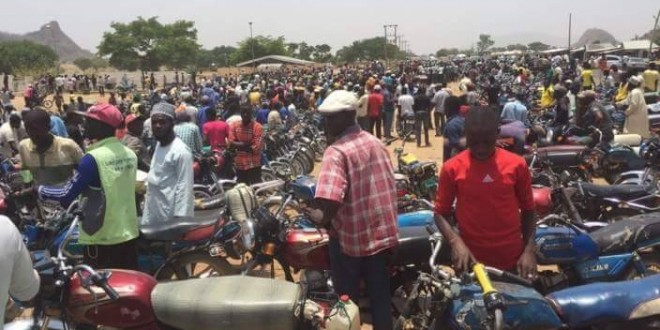
The fuel scarcity is hitting everyone hard. The small to medium scale businesses are really struggling as well and like the rest of the country we are begging for respite. Fuel scarcity also poses a major threat to our food security. The cost of transporting food round the country would increase which would also spike the food costs. Not good news at all at the moment. Losses are been incurred everywhere in the country.

I came across a news article regarding these losses from the Abuja Chamber of Commerce and Industry (ACCI) which made it clear to the government that the issue of unavailability of petroleum products and its importation portrays our country in bad light. It shows us up as an incompetent manager of our resources.
“NNPC from the comments of it’s officials may have given up. We may seriously need to divest our refineries. Businesses and our economy are being battered from all sides. Forex, energy supply, infrastructure, security concerns. The list is endless.” He said
Businesses especially MSME’s have lost over N30B through inadequate supply of petroleum products. Labour productivity is low as employees have stayed off work since the hike of fares by providers and when they come, they are always late. NNPC banned the use of containers to buy petrol without considering that most households and small businesses run on petrol generating sets. This has forced them to close shops. Buying with kegs is not the cause of scarcity but inadequate supply of products.
According to Tony Ejinkeonye, NNPC over the years has not proffered any meaningful solution. They are fond of treating symptoms instead of addressing the issue, he concluded.

The fate of a business owner in Nigeria at the moment reminds me of a Late Koffi Awnoor verse;
"If I turn here, the rain beats me
If I turn there the sun burns me
The firewood of this world Is for only those who can take heart
That is why not all can gather it"


Naija, we are still pregnant with hope!